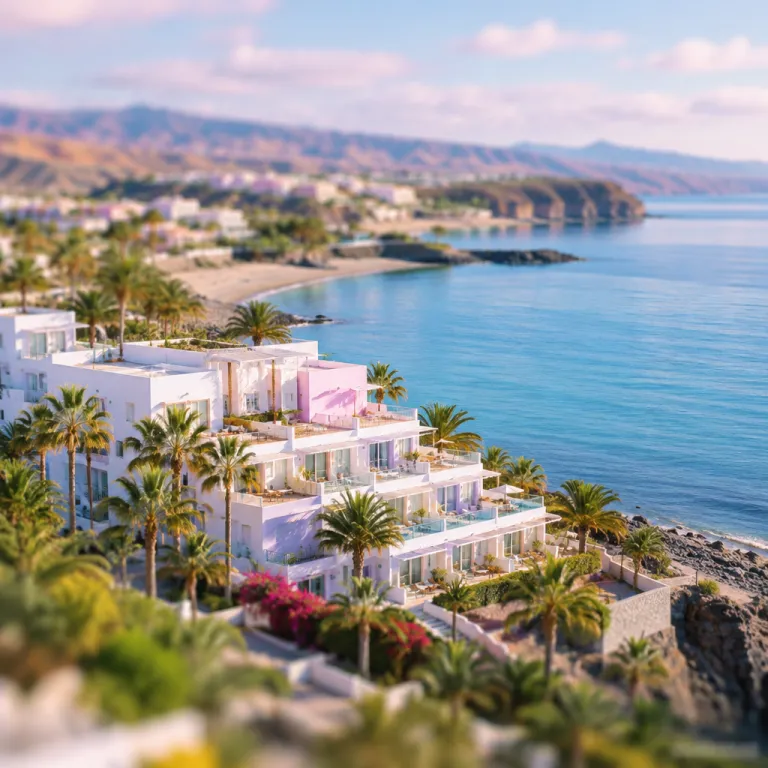
The real winter map of the Canary Islands: where the sun lingers
When Europe tips into grey, the Canary Islands’ winter-sun resorts come into their own. South-facing coasts on each island consistently feel warmer and drier than the greener, cloud-catching north, which matters if your holidays are built around pool time rather than fleece layers. According to Spain’s meteorological agency AEMET, average daytime highs in January reach around 22 °C in south Tenerife and south Gran Canaria, with roughly 6–7 hours of sunshine, while sea temperatures hover near 19–20 °C on the southern shores.1
Think of each Canary Island as two destinations in one, with the south coasts tuned to winter sun and the north leaning into misty laurel forests and volcanic slopes. The south of Tenerife, Gran Canaria, Lanzarote and Fuerteventura forms a necklace of resorts where stone-warm promenades, palm-lined playa fronts and sheltered bays keep families outside from breakfast to late evening. In contrast, the northern shores of these islands can feel cooler and more Atlantic-facing in winter, better for walkers and food-focused travellers than for all-day beach sessions.
For a premium stay, this split shapes everything from your hotel pool temperature to how often you reach for a cardigan at dinner. Long-term climate records show that south Tenerife leads very slightly over Gran Canaria and Lanzarote for highest winter daytime temperatures, while Lanzarote records some of the highest annual sunshine totals in the archipelago and the south coasts of all four main islands keep sea temps around 19–20 °C in midwinter.1 South Tenerife residents and regular visitors talk about warmest winter days around Costa Adeje, Playa del Duque and the area of Playa de las Américas, while those based in south Gran Canaria gravitate to Playa del Inglés, Maspalomas and Meloneras. On Lanzarote and Fuerteventura, the east and south coasts gather the most reliable winter light, with Costa Teguise, Puerto del Carmen, Playa Blanca and the Jandía peninsula forming the core of high-end winter resorts.
| Island & coast | Typical Jan daytime high1 | Sunshine hours / day | Sea temperature |
|---|---|---|---|
| South Tenerife | ~22 °C | 6–7 | ~19–20 °C |
| South Gran Canaria | ~21–22 °C | 6–7 | ~19–20 °C |
| Lanzarote (south/east) | ~20–21 °C | 6–7 | ~19 °C |
| Fuerteventura (south/east) | ~20–21 °C | 6–7 | ~19 °C |
1Based on long-term AEMET climate normals for representative south-coast stations.
Gran Canaria and Tenerife: winter sun belts for premium families
For many travellers, the decision between Gran Canaria and Tenerife defines their winter holidays Canary experience. Both islands offer a dramatic volcanic interior, a major national park on Tenerife and a string of south-coast resorts that stay reliably bright when northern Europe is under cloud. The key is choosing the right pocket of each island, because a hotel in the wrong microclimate can turn a winter-sun escape into a week of chasing gaps in the clouds.
On Tenerife, the south-west triangle between Costa Adeje, Playa de las Américas and Los Cristianos is the classic winter sun belt. Here, Canary Islands winter-sun hotels range from discreet oceanfront properties with heated infinity pools to larger family-friendly resorts with kids’ clubs, splash zones and inclusive dining that still feels curated rather than canteen-like. For example, several five-star properties in Costa Adeje keep at least one main pool heated to around 27 °C in winter and run supervised children’s clubs from roughly ages 4–12, allowing parents to plan spa time or quiet dinners while younger guests are occupied. Stay close to the coast rather than inland and you gain softer evenings, calmer breezes and easy access to sheltered beach coves such as Playa del Duque or the smaller playas tucked between breakwaters.
Gran Canaria mirrors this pattern, but with its own character and coastline. The arc from Playa del Inglés through Maspalomas to Meloneras, then west towards Puerto Rico and Amadores, concentrates many of the island’s premium resorts and year-round heated pools. Families who want a quieter base often look to the elegant villas and low-rise hotels around Meloneras or to carefully chosen luxury escapes highlighted in specialist guides to Gran Canaria luxury stays, where heated lagoon-style pools and tiered sun terraces are standard. Day trips north reveal a greener, cooler Canaria of cliff villages and traditional markets that feel far from the resort strip, underlining how sharply the climate can change between the south’s dune-backed promenades and the cloudier interior.
Lanzarote and Fuerteventura: wind, light and low-slung luxury
Lanzarote and Fuerteventura sit closer to Africa, and that geography shows in their winter light. These islands can feel more exposed to wind than Tenerife or Gran Canaria, yet their east and south coasts often deliver the clearest skies and driest conditions for winter-sun beach hotels. The landscapes are stripped back and volcanic, with low whitewashed villages, black lava fields and long beaches that suit travellers who prefer horizon views to dense resort skylines.
On Lanzarote, three main hubs shape most winter holidays. Costa Teguise in the north-east suits active families who want easy access to surf schools and breezier beaches, while Puerto del Carmen offers a long, lively playa front with a mix of inclusive resorts and smaller, design-led hotels that still feel family-friendly. Playa Blanca in the south is the most sheltered, with upscale resorts, heated pools and views across to Fuerteventura, making it a strong choice for those who value calm seas and sunset-facing terraces. A number of five-star properties here publish clear winter policies on pool heating and family facilities, such as keeping children’s pools warmed to around 26–28 °C and running kids’ clubs with age-banded activities so teenagers and younger children each have their own spaces.
Fuerteventura stretches this formula into something even more beach-focused. The island’s east coast strings together resort areas from Corralejo down to Caleta de Fuste, but it is the south, around Costa Calma and the Jandía peninsula, that feels most tuned to winter sun, with long, pale sand beaches and a scattering of high-end inclusive properties. Families who prize space over nightlife often choose Fuerteventura for its quieter evenings, while still timing flights to match school holidays and using the island’s reliable year-round climate to justify a longer stay in one of the Canary Islands’ winter-sun hotels that line its most protected bays.
Booking strategy: securing the right winter-sun base, not just any resort
Once you understand the winter geography of each island, the booking game shifts from chasing last-minute deals to targeting specific micro locations. For premium families, the priority is usually a hotel that balances reliable winter sun with genuinely family-friendly service, rather than simply the biggest pool or the loudest entertainment programme. That means reading beyond the headline description of inclusive options and looking closely at heated pool policies, children’s facilities and how close the property sits to a sheltered beach rather than a windy headland.
On Tenerife’s Costa Adeje, for example, some of the most refined Canary Islands winter-sun hotels sit on slightly raised promenades above Playa del Duque, giving sea views and wind protection without sacrificing direct access to the sand. Similar nuances appear on Gran Canaria, where properties above Puerto Rico’s amphitheatre bay can feel sunnier and less breezy than those tucked deep in the valley, and where the orientation of a hotel in Playa del Inglés can change how much afternoon sun reaches its terraces. On Lanzarote, choosing between Costa Teguise, Puerto del Carmen and Playa Blanca is less about star ratings and more about how your family balances wind, waves and walking-friendly promenades.
Practicalities matter too, especially in winter high season when flights from northern Europe fill quickly and the most sought-after rooms at Canary Islands winter-sun hotels sell out months ahead. Booking non-stop flights to the right island, then arranging private transfers to avoid long coach routes through multiple resorts, can turn a travel day into a smooth start rather than a test of patience. Aim for properties that publish clear information on heated pools, kids’ club ages and beach access, and you will arrive knowing that your chosen corner of the Canary Islands is set up for the kind of winter-sun holiday your family actually wants, not the one a generic brochure assumes.
FAQ
Which Canary Island is warmest in winter for families ?
South Tenerife, south Gran Canaria, Lanzarote and Fuerteventura all offer mild winter conditions, but the south coasts of Tenerife and Gran Canaria tend to feel slightly warmer and more sheltered. AEMET data shows typical January highs around 21–22 °C on these southern shores, with several hours of daily sunshine and relatively low rainfall.1 These areas concentrate many Canary Islands winter-sun hotels with heated pools and family-friendly facilities. For most premium families, choosing a south-coast base on any of these islands will deliver comfortable pool weather for much of the season.
Is the sea warm enough to swim during a winter stay ?
Sea temperatures around the Canary Islands in winter are generally cool but swimmable for many travellers, especially on the southern coasts where conditions feel milder. AEMET’s coastal records indicate winter sea temps of roughly 19–20 °C, which most adults and older children find refreshing rather than cold once acclimatised.1 Families often combine sea dips with time in heated hotel pools, which are standard in many Canary Islands winter-sun hotels at the premium end of the market. If swimming is a priority, look for sheltered bays and south-facing beaches where the water feels more inviting.
How far in advance should I book winter-sun hotels in the Canary Islands ?
Winter is peak season for the Canary Islands, so premium properties in the sunniest south-coast areas often sell out early. Booking Canary Islands winter-sun hotels three to six months ahead usually gives better choice of room types, especially for family suites and interconnecting rooms. Last-minute deals exist, but they rarely align with the most desirable locations and school holiday dates.
Are all-inclusive resorts a good idea for winter family trips ?
Inclusive resorts can work well for families who value predictable costs and on-site dining, particularly when days are spent around the pool. In the Canary Islands winter-sun hotels segment, many higher-end inclusive properties now offer flexible dining, à la carte options and quieter adults’ areas, which suit multi-generational groups. If you enjoy exploring local restaurants, consider a half-board or breakfast-only plan in a walkable resort area instead.
What is the main difference between north and south coasts in winter ?
South coasts on islands like Tenerife, Gran Canaria, Lanzarote and Fuerteventura are generally sunnier, drier and warmer in winter than their northern counterparts. The north tends to be greener, with more cloud and occasional rain, which appeals to hikers and travellers seeking quieter, more local atmospheres. For classic poolside holidays in Canary Islands winter-sun hotels, the south remains the safer choice during the cooler months.