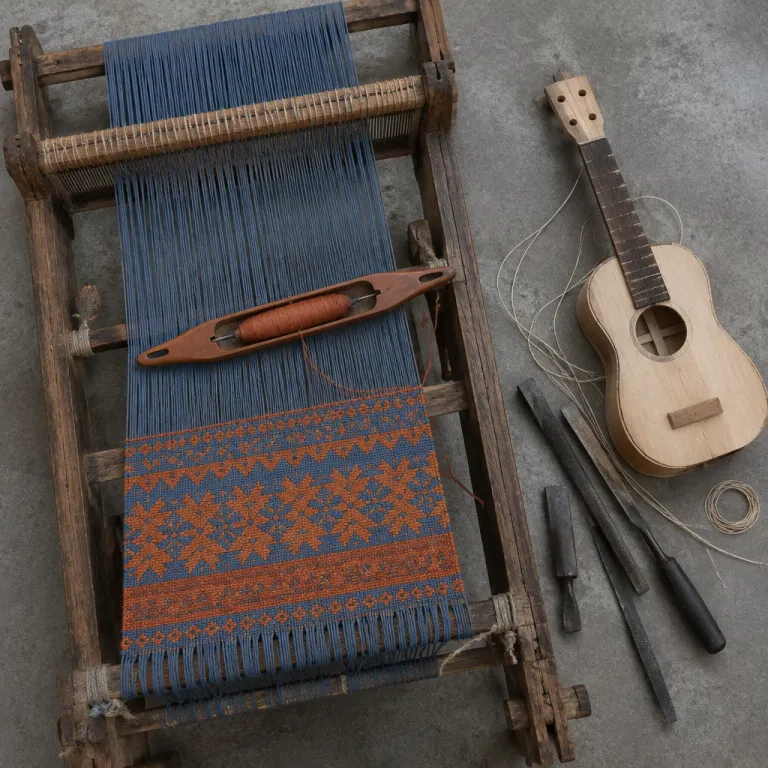
Canary Islands craft artisans and the timple behind your luxury stay
On the Canary Islands, craft artisans shape a quieter kind of luxury that you feel in the grain of wood and the weight of handwoven cloth. When you plan a premium escape, understanding how Canary Islands craft traditions and timple culture thread through daily life will change how you choose both island and hotel. A refined stay on any island becomes richer when the lobby soundtrack includes a traditional timple melody and the walls carry ceramics and textiles made a few kilometres away.
The timple is the emblematic stringed instrument Canarian musicians cradle at village fiestas, a compact five stringed instrument with a bright, percussive voice. According to instrument makers interviewed at the Casa Museo del Timple in Teguise, “How many strings does a traditional timple have? Usually five strings, some play with four”, and that small detail matters when you listen closely in a hotel courtyard after sunset drinks. When a concierge can explain the difference between a traditional timple piece and a guitar arrangement, you sense that the work carried into curating cultural heritage is as serious as the wine list.
For travellers who will cross several islands in one trip, the contrast between a design focused property in Lanzarote and a rural house on Gran Canaria reveals how crafts anchor identity. On Lanzarote, the legacy relationship between lava, ceramics and wood is visible in both architecture and the way a luthier shapes each timple instrument from local timbers. On Gran Canaria, a restored farmhouse near Santa Lucía de Tirajana might host artisan workshops where guests learn about calado embroidery or watch a potter form a vessel slowly by hand without a wheel.
Gran Canaria: from timple echoes to loom rhythms
Gran Canaria is often sold as a beach and resort island, yet its interior villages hold the strongest pulse of Canary Islands craft, artisans and timple traditions. When you book a luxury hotel in the hills above Santa Lucía de Tirajana, you stay close to the artisan workshops that keep weaving, pottery and instrument making alive. This proximity lets you balance pool time with visits to studios where every piece woven on the loom or carved on the bench is part of a living archive.
In the historic north of Gran Canaria, the town of Santa María de Guía, often shortened locally to María Guía, has long been associated with careful handcraft and slow rhythms. Here, a guest can move from a calm suite to a casa museo style space where textiles, ceramics and a single traditional timple share the same whitewashed room. That kind of casa museo experience, even when privately curated by a hotelier, helps you read each crafted object as part of a broader Canarian cultural heritage rather than as isolated décor.
South of the capital, the municipality of Santa Lucía, centred on Santa Lucía de Tirajana, offers a different mood with ravines, palm groves and scattered farmhouses. A premium rural hotel here might arrange a visit to a potter who still shapes clay as Canary Island families did before tourism, or to a weaver whose loom beats echo faintly like a muted stringed instrument. If you are comparing refined areas across the archipelago, guides to which Canary Island areas offer the most refined hotel stays help you weigh Gran Canaria’s craft rich heartland against coastal glamour elsewhere.
Lanzarote and the Casa Museo del Timple
Lanzarote feels sculpted rather than built, and that volcanic discipline shapes how Canary Islands craft artisans and timple makers work with wood and silence. On this island, the town of Teguise hosts the Casa Museo del Timple, a museum dedicated to the instrument Canarian musicians treat as both tool and symbol. Staying in a discreet luxury hotel nearby, such as a restored manor in the historic centre, allows you to step from a minimalist suite into rooms where each traditional timple example hangs like a small sculpture.
Inside the Casa Museo del Timple, you see how luthiers such as Simón Morales Tavío, cited in the museum’s own catalogues, helped build timples systematically, turning a rural stringed instrument into a refined object. Exhibits explain how alternate woods, new string materials and even electro acoustic versions have expanded the instrument’s range without breaking its legacy roots. For a traveller, that narrative mirrors the way Lanzarote’s best hotels reinterpret traditional island forms while keeping their volcanic soul intact.
Beyond the museum, artisan workshops on Lanzarote often combine ceramics, textiles and instrument making in shared spaces, reflecting how crafts overlap in island life. A concierge who knows these studios can arrange private visits where you watch a potter coax a bowl or jug from clay while a timplista tests a new instrument in the corner. If your itinerary stretches between islands, pairing Lanzarote with a quieter outpost such as La Graciosa, using a guide to refined stays between the Canary Islands and the Azores, creates a route where every stop deepens your understanding of craft.
Weaving, ceramics and the loom’s quiet luxury
While the timple often takes the spotlight, the loom and the kiln shape an equally important layer of Canary Islands craft culture. Across the islands, women and men maintain weaving traditions on pedal and floor looms, turning sheep’s wool, silk, linen and cotton into textiles that soften stone walled suites. Museums and active studios confirm that “What were common fibres for Canary weaving? Sheep’s wool, silk, linen and cotton”, and those fibres still appear in throws folded at the foot of your hotel bed.
On La Palma, weaving houses such as the renowned women’s collectives in El Paso keep loom crafts alive, while on Gran Canaria older weavers continue to work well into their sixties. One artisan from El Paso explains in a local exhibition leaflet, “Each shawl carries the memory of the woman who taught you the pattern,” and their textiles often reach curated hotel shops, where a single hand finished runner in natural tones can transform a neutral room into a specific island story. When you choose a property that highlights the maker’s name beside each textile, you participate in work carried across generations rather than anonymous décor.
Ceramics follow a similar path, especially in villages where the potter still shapes clay without a wheel, echoing techniques that predate Spanish conquest and link subtly to North Africa. In some rural hotels, you might drink morning coffee from a cup whose form mirrors vessels excavated on the same island, connecting daily ritual to deep time. Asking staff about the origin of ceramics, textiles and even the small timple instrument on a shelf is a simple way to ensure your stay supports Canarian artisans directly.
Planning a craft centred stay across the islands
Designing an itinerary around Canary Islands craft artisans and timple traditions changes how you read maps and hotel descriptions. Instead of only scanning for pools and spas, you will look for mentions of artisan workshops, casa museo spaces and partnerships with local makers. This approach suits the solo explorer who prefers a quiet sea view from a terrace after a day spent in a loom room or luthier’s studio.
Start by choosing one island as your base, perhaps Gran Canaria for its mix of urban energy and rural calm, then add Lanzarote or La Palma for contrast. On each island, shortlist properties that reference Canarian cultural heritage, whether through curated ceramics, a resident potter in the grounds or regular traditional timple performances in the courtyard. A guide to Tenerife’s hidden gems and coastal calm can help you extend this craft focus to another island without losing the thread of authenticity.
As you move, take time to share your experiences thoughtfully, whether you write a detailed review or simply share Facebook impressions that highlight artisans by name. When you post a photograph of a stringed instrument on a hotel wall or a loom in motion, mention the island, the artisan and the specific craft so others can follow. In doing so, you help ensure that the skills behind every timple instrument, woven shawl and hand thrown cup remain part of the islands’ future, not just their past.
FAQ
How many strings does a traditional timple have ?
A traditional timple usually has five strings, which gives the instrument its bright, agile sound in Canarian folk music. Some musicians choose to play with four strings, but makers still design the body and bracing for five. When you see a timple in a hotel or museum, counting the strings is an easy way to recognise an authentic form.
Where can I hear the timple during a luxury stay ?
You can often hear the timple at romerías, which are local pilgrim festivals where music fills village streets and squares. Some high end hotels invite timplistas to perform in courtyards or lounges, especially on islands such as Lanzarote and Gran Canaria. Checking event calendars or asking the concierge about live folk music is the most reliable way to plan an evening around the instrument.
Are traditional looms and weaving still active in the Canary Islands ?
Yes, traditional looms remain active in several islands, particularly in weaving centres on La Palma and rural areas of Gran Canaria. Museums preserve historic looms, while working studios continue to produce shawls, blankets and decorative textiles for both locals and visitors. When booking, look for hotels that collaborate with these studios or feature their textiles in rooms and common spaces.
How can I support local artisans when booking a premium hotel ?
You support artisans by choosing hotels that clearly credit makers for the ceramics, textiles and instruments displayed on site. Many properties now offer visits to nearby studios, curated craft corners or in house shops where you can buy directly from Canarian artisans. Reading property descriptions carefully and asking pre arrival questions about craft partnerships helps direct your spending toward the local creative economy.
Do craft focused activities fit a short island break ?
Even on a short three or four night stay, you can weave craft into your plans without sacrificing rest. A single visit to a casa museo, a morning in an artisan workshop or an evening timple concert adds depth to otherwise standard beach days. Planning one cultural activity per day keeps the rhythm relaxed while still connecting you to the islands’ living traditions.