Where to Stay in Adeje Tenerife: Hotel Areas, Atmosphere & How to Choose
Why Adeje in Tenerife is a strong hotel choice
Ocean light hits differently on this stretch of the south-west coast of Tenerife. In Adeje, especially around Costa Adeje, the hotel scene has evolved far beyond the old package-holiday image of the Canary Islands and now caters seriously to luxury and premium travelers. You come here for reliable sun, yes, but also for a concentration of polished hotels, refined spas and well-run resorts that make trip planning unusually straightforward.
The geography helps. From the promenade that runs between Playa Fañabé and Playa del Duque, you can walk past a dense line of island hotels, each with its own pool terraces stepping down towards the Atlantic. Behind you, the slopes rise towards the old town of Adeje, and on clear days you see the outline of La Gomera across the water. For many visitors comparing hotel options in Tenerife Spain, this compact, walkable layout is a decisive advantage over more scattered coastal areas.
Expect a clear focus on comfort rather than cutting-edge design. Most hotels in Adeje Tenerife are established properties that have been renovated over time, with large rooms, generous balconies and classic resort facilities. If you want a quiet base with easy access to beaches, restaurants and day trips across the island, this is one of the best areas to check first before you book any hotel in Tenerife. As a rough guide, mid-range hotels often start around €120–€180 per night in shoulder season, with five-star resorts such as Bahia del Duque or Iberostar Selection Anthelia typically higher; recent review aggregates on major booking platforms consistently rate the better properties above 8.5/10, so always verify current prices and scores directly before you commit.
Atmosphere and areas: Costa Adeje, Playa zones and the old town
Down on the waterfront, Costa Adeje feels almost like a curated corridor of resort hotels. The stretch around Playa Fañabé and Playa de Torviscas is the liveliest, with a constant flow of people along Avenida de Bruselas and Avenida Ernesto Sarti. Here, beachside hotels are a popular choice for travelers who want to step out of the lobby and be on the sand in minutes, with a choice of cafés and chiringuitos for long, late lunches.
Walk 10 to 15 minutes north towards Playa del Duque and the mood shifts. The architecture becomes more restrained, the landscaping more manicured, and the clientele a little quieter. This is where many of the higher star hotels cluster, with more exclusive pool areas and a stronger emphasis on privacy. If you are looking for a hotel in Costa Adeje that feels grown-up and calm, this zone usually suits better than the louder stretches closer to Playa de las Américas, and it is where you find several of the island’s flagship luxury properties.
Up the hill, the original town of Adeje offers a different perspective. Around Calle Grande and the church of Santa Úrsula, you are 3 to 4 km from the coast, in a setting that feels more Canarian than resort. There are fewer hotels along the side streets here, but staying uphill gives you cooler evenings, views down to the ocean and easier access to local guachinches, the informal eateries where goat stew and papas arrugadas still dominate the menu. It is a trade-off: less immediate beach access, more sense of place and a clearer connection to everyday life in Tenerife Spain.
What to expect from rooms, pools and spa facilities
Rooms in Adeje’s hotels tend to be generous in size. Even standard categories often start around 25 to 30 m², with many properties offering family rooms, junior suites and multi-room layouts that work well for longer stays. Balconies are almost a given, and in the better hotels you can expect at least a partial sea view from a good proportion of rooms. When you check availability, pay close attention to orientation; a west-facing room rewards you with those long Atlantic sunsets that define Tenerife.
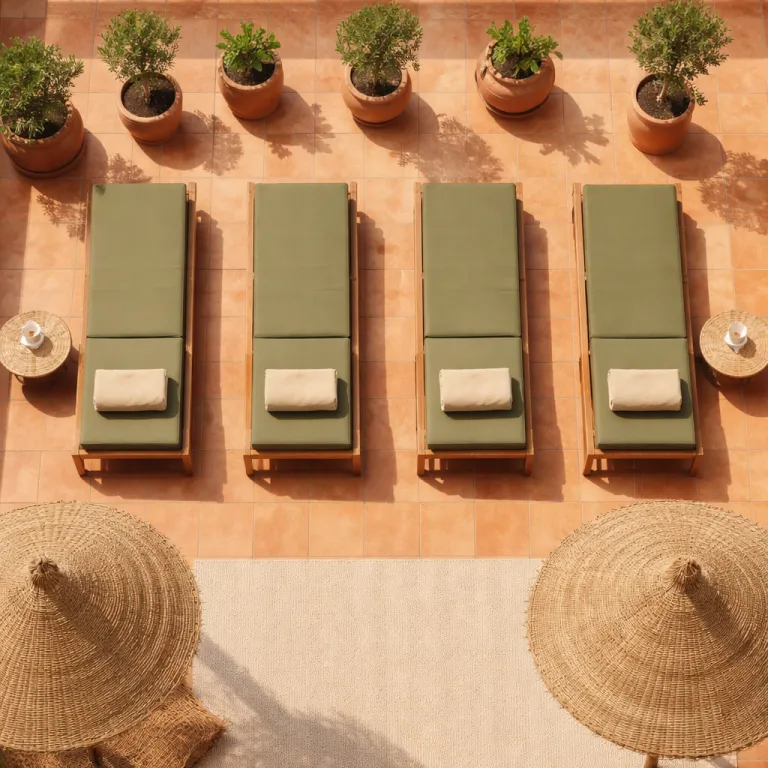
Pool culture is serious here. Most hotel pools are outdoor, often tiered across different levels to maximise views, with separate children’s areas and quieter adults-only zones. Some properties add heated pools for winter, which matters more than you might think when the trade winds pick up. If you value calm, look for hotels that clearly separate family and adults’ areas rather than those that simply label one corner as a prestige or exclusive zone without real physical separation.
Spa offerings vary widely. At the top end, you find full thermal circuits, treatment cabins, saunas and dedicated relaxation rooms, sometimes with views towards La Gomera. Notable examples include the extensive spa at GF Victoria, known for its water circuit and rooftop pool, and the wellness centre at Iberostar Selection Anthelia, both of which score highly in recent guest reviews. Other hotels offer a more basic wellness area, essentially a small spa with a couple of treatment rooms attached to the gym. Before you book, read the description carefully and check whether spa access is free for guests or charged per session; this can change the feel of your stay if you plan to use these facilities daily.
Choosing the right hotel profile: families, couples and groups
Family travelers gravitate naturally towards Costa Adeje. The gently shelving beaches, promenade without major road crossings and abundance of casual restaurants make logistics easy. Many hotels in Adeje are set up for this, with kids’ clubs, splash pools and flexible room configurations. Properties such as Iberostar Selection Anthelia or GF Isabel, for example, are frequently highlighted on booking sites for their family facilities. If you are travelling with children, prioritise hotels that clearly state their family focus rather than those that simply accept children; the difference in programming and layout is noticeable once you arrive.
Couples, especially those seeking a quieter stay, often prefer adults-only wings or entire adults-only properties. These hotels typically offer calmer pool decks, more intimate dining rooms and a spa environment that feels less like a family attraction. When you check and compare, look beyond the star rating; a four-star adults-only hotel can feel more serene than a larger five-star resort with a mixed clientele. For many, that trade-off is worth it, and recent review scores often reflect higher satisfaction among guests who choose a clearly adults-focused hotel profile.
Groups of friends and multi-generational families may want the flexibility of larger resort-style hotels with multiple restaurants, bars and activity programmes. These properties often sit closer to the livelier parts of the coast, near the border with Playa de las Américas, where nightlife and beach clubs are within walking distance. If your group includes both early risers and night owls, this mixed environment can be a popular choice, provided everyone accepts a little more background noise in exchange for convenience.
- Families: look for kids’ clubs, splash areas and apartment-style rooms.
- Couples: prioritise adults-only pools, quieter wings and spa-focused hotels.
- Solo travellers: choose walkable locations near the promenade and well-reviewed mid-size resorts.
Location, access and exploring beyond the hotel
Staying in Adeje Tenerife places you well for exploring the rest of Tenerife Spain. From the coastal hotels, the TF-1 motorway is usually a short drive uphill, linking you to the airport in the south and to Santa Cruz in the north. Transfer times from Tenerife South Airport to Costa Adeje are typically around 20 to 30 minutes by taxi or private transfer, depending on traffic. Day trips to Teide National Park, with its lunar landscapes and cable car, are straightforward from here, and many visitors consider this the essential excursion to balance days by the pool.
On foot, the coastal path is your main axis. From the end of Costa Adeje you can walk south past the marina of Puerto Colón and onwards towards Playa de las Américas, or head north along the promenade towards the quieter coves beyond Playa del Duque. This makes it easy to compare different beaches and atmospheres without committing to a taxi or bus. For a more local feel, a short drive up to the Barranco del Infierno trailhead, just above the town of Adeje, offers a canyon walk that contrasts sharply with the polished hotel strip.
Public transport is functional rather than glamorous. Buses connect Costa Adeje with other parts of the island, but if you plan to explore widely, renting a car remains the most efficient option. When choosing between hotels near the coast, consider whether on-site parking is available and how easy it is to access the main road network; this matters more in peak seasons when coastal traffic can slow to a crawl at certain times of day.
How to compare and verify before you book
Decision-making in Adeje is less about finding a good hotel and more about finding the right fit. Start with location: do you want to be directly on the promenade, one or two streets back, or higher up the hill with wider views? Once that is clear, compare room types carefully. Many hotels use similar names for very different layouts, so always read the full description and, if possible, look at a floor plan before you check availability for your dates.
Next, scrutinise facilities. If a spa is important, confirm whether it is a full wellness centre or a modest treatment area. If you care about a quiet pool, check whether there is a dedicated adults-only section and how it is separated from family areas. For those who value a sense of exclusivity, some properties offer club-style or prestige floors with private lounges and separate breakfast rooms; these can change the entire feel of a stay without requiring a change of hotel.
Finally, read a range of opinions rather than relying on a single review or marketing description. Pay attention to comments about noise levels, sunbed availability around the pool and the general upkeep of rooms and public areas. On major booking platforms and review sites, focus on recent ratings from the last 6 to 12 months, as these reflect current management and refurbishment cycles. In a destination as established as the Canary Islands, small details of maintenance and service often distinguish the best hotels from the merely adequate. A careful, critical approach before booking usually results in a stay that matches, rather than disappoints, your expectations.
Is Adeje in the Canary Islands a good place to stay for a first trip to Tenerife?
Adeje, and particularly Costa Adeje, is an excellent base for a first trip to Tenerife because it combines reliable weather, a wide choice of hotels and easy access to both beaches and inland excursions. The area is compact and walkable, with a long seafront promenade linking several beaches, and it connects quickly to the island’s main road network for day trips. For most first-time visitors who want comfort and convenience without feeling isolated, it is a very strong choice.
What is the best time of year to stay in a hotel in Adeje?
The most balanced periods to stay in a hotel in Adeje are spring and autumn, when the weather is warm and pleasant but the area feels less crowded than in peak summer or around major holidays. During these months, temperatures are comfortable for both beach days and inland hikes, and it is generally easier to find your preferred room type when you check availability. Winter is also popular thanks to the mild climate, but expect a busier atmosphere and more demand for south-facing rooms.
Is Adeje suitable for families with children?
Adeje is very suitable for families, especially around Costa Adeje, where many hotels are designed with children in mind. You will find family rooms, kids’ clubs, children’s pools and easy access to gently shelving beaches that work well for younger swimmers. The seafront promenade allows for safe stroller walks without major road crossings, and there is a wide choice of casual restaurants that are used to welcoming families.
Is Adeje a good option for solo travelers?
Adeje works well for solo travelers who want a safe, well-serviced base with plenty of options within walking distance. The concentration of hotels, cafés and coastal paths makes it easy to structure your days without a car, and there are enough excursions and activities to join organised tours if you prefer not to explore alone. For solo guests seeking quiet, choosing a hotel slightly away from the busiest beachfront sections usually provides a better balance between sociability and rest.
What should I check before booking a hotel in Adeje?
Before booking a hotel in Adeje, check three key points: the exact location in relation to the beaches and promenade, the type and size of the room you are reserving, and the details of the facilities that matter most to you, such as spa access or adults-only areas. Read several recent reviews to understand noise levels, pool atmosphere and general maintenance. Finally, verify whether the hotel’s style and typical clientele match the kind of stay you are seeking, whether that is family-focused, romantic or activity-driven.