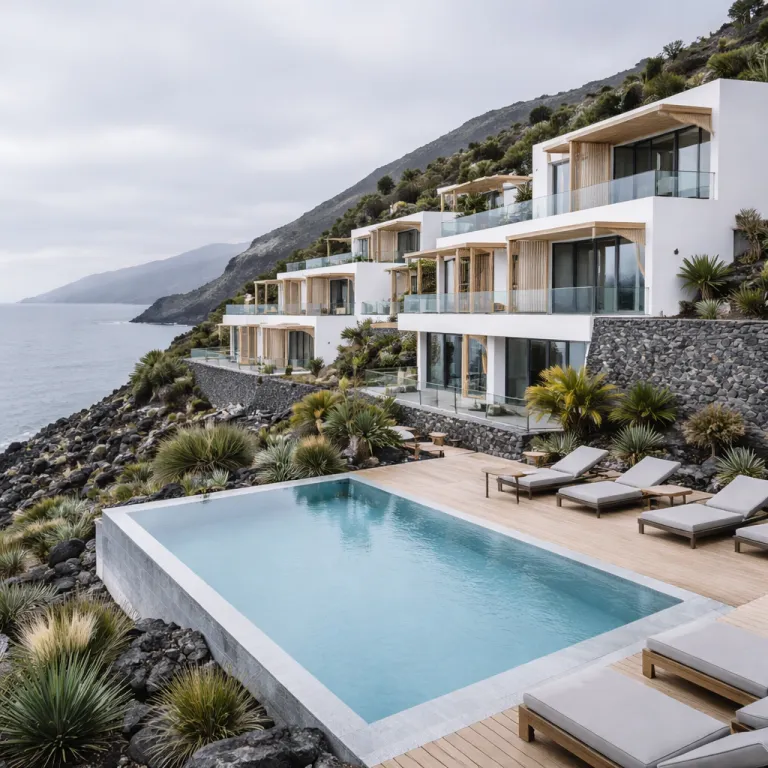
The Canary Islands’ design turn: from resort wall to volcanic stage
The most interesting design hotels in the Canary Islands now treat the Atlantic and the lava fields as their lobby rather than a backdrop. A new generation of architects and hoteliers across the archipelago is quietly rewriting what a luxury hotel here can be, and the shift is especially clear when you compare these properties with the brutalist resort towers that once defined mass tourism on every island. For travelers who want to book a hotel that feels rooted in place rather than sealed off from it, this is the moment to pay attention to how design, landscape and service standards now intersect.
The philosophical foundation for this movement sits in Lanzarote, where César Manrique’s legacy still shapes how serious hotels approach architecture and contemporary design. His insistence that any hotel or casa should sit low, follow the contours of the island and frame the view rather than dominate it has become a quiet code for the best design-led properties Canary Islands wide, from hotel rural conversions to urban addresses in Las Palmas. When you book select places such as César Lanzarote or the minimalist Casa Montelongo in Fuerteventura, you are not just reserving rooms; you are buying into a design language that treats volcanic stone, wind and light as primary materials.
Across the islands, the contrast with the 1970s and 1980s is stark. Then, the business model was volume tourism, with high-rise hotels standing side by side, each property pushing package deals and offering little incentive to keep guests exploring beyond the resort perimeter. Now, the most interesting hotels in the Spain–Canary region are smaller, more characterful and more architectural, and they command higher rates because they deliver a richer sense of island life, from the guachinche wine bars of northern Tenerife to the black-sand beach coves of Gran Canaria.
For business-leisure travelers extending a work trip in Spain, this evolution matters. A design-led hotel in the Canary Islands is not just a nicer place to sleep; it is a more efficient base, with calm rooms, strong connectivity and thoughtful public spaces that make it easy to move between laptop and pool, meeting and mountain. When you check availability at these properties, you are also choosing a tourism model that keeps more value on the island, supports local artisans and rewards hotels that invest in architecture rather than in ever larger buffets.
César Manrique and the Lanzarote blueprint for landscape integrated hotels
Lanzarote is where the story of design hotels in the Canary Islands truly begins, and any serious conversation about architecture here starts with César Manrique. His work proved that a hotel, a casa or even a restaurant could be carved into lava bubbles, wrapped around craters and still feel luxurious, and that lesson now informs everything from hotel rural conversions to high-end resorts. When you walk into a property like César Lanzarote, the way the rooms step down the slope and the way each terrace frames the ocean feels like a direct continuation of his thinking.
Contemporary architects on the island have taken that blueprint and pushed it into a more international language of contemporary design. Low-rise hotels with whitewashed walls, dark volcanic stone and shaded patios now line parts of the coast where concrete towers once dominated, and the best of them use local materials with the same care a chef uses ingredients. The result is a new generation of luxury hotels in the Canary Islands where the style is calm and precise rather than flashy, and where the beach is approached as a natural extension of the lobby rather than a fenced-off amenity.
This approach is not limited to Lanzarote. On Tenerife, Royal Hideaway Corales has become a reference point for how a large luxury hotel can still feel sculpted into the coastline, with its hilltop architecture on Costa Adeje stepping down towards the sea in a series of terraces that echo the island’s agricultural past. In the historic town of Garachico, Hotel San Roque shows how a restored casa with a strong design narrative can coexist with the village’s hotel emblemático properties, each one using color, art and proportion to create a different reading of the same volcanic island. When travelers book hotel stays in these places, they are choosing design as a way to understand the Canaries rather than just as a decorative layer.
Even in urban Las Palmas, where the skyline still carries traces of the earlier resort boom, the shift is visible. Design Plus BEX Hotel brings a sharp, metropolitan style to the capital, proving that a city hotel can be both a functional base for business and a playful nod to the island’s maritime history, with rooms that feel more like a well-edited apartment than a standard chain property. For executives who need to book select addresses that balance work and leisure, this kind of design-forward hotel in the Canary Islands offers a different proposition from the anonymous towers that still line parts of the beach in Gran Canaria.
Gran Canaria, Tenerife and the new design geography of the archipelago
Gran Canaria has long been shorthand for mass tourism, yet the most interesting hotels today are quietly rewriting that narrative. In Maspalomas, Seaside Palm Beach uses a retro-inspired design language to turn what could have been a standard beach resort into a study in color, geometry and mid-century style, and the result is a hotel where the pool deck feels as curated as the rooms. Up in Las Palmas, the same island now offers urban travelers a very different experience, with design-focused hotels that plug you straight into the city’s galleries, restaurants and Atlantic light.
The capital’s Design Plus BEX Hotel is a good example of how a property can serve both business and leisure without sacrificing personality. Its contemporary design references the building’s former life as a bank, and the public spaces are calibrated for laptop sessions by day and cocktails by night, which suits the business-leisure persona perfectly. When you check availability here or at other Las Palmas addresses, you are not just comparing hotel offers; you are weighing up how each hotel’s architecture and service culture will support your own rhythm between meetings, beach walks and late dinners.
Tenerife, by contrast, has become the archipelago’s laboratory for high-end resort architecture. Royal Hideaway Corales on Costa Adeje is the clearest statement of intent, with its sculptural forms, generous sea-facing terraces and a layout that ensures most rooms look out over the ocean, turning every sunrise into a private performance. Inland, smaller properties such as Hotel San Roque and various hotel rural conversions in the north show how a historic casa can be reimagined with strong design while still feeling like part of the village, and this duality is what makes design hotels in the Canary Islands so compelling for travelers who want both authenticity and luxury.
The connectivity between islands has also improved, which changes how travelers think about multi-island itineraries. With airlines such as Binter linking Gran Canaria to mainland wine regions, as reported in coverage of the new direct route from Gran Canaria to La Rioja, it becomes easier to treat the Canary Islands as one extended design landscape rather than isolated destinations. For hotel owners, this means that a guest who books a hotel in Las Palmas for meetings might then book select nights in a rural Tenerife casa or a Lanzarote beach retreat, comparing how each island uses architecture to frame its own version of the Atlantic.
From volume to value: why design hotels command higher rates
The rise of design hotels across the Canary Islands is not just an aesthetic story; it is a business strategy. Properties that invest in architecture, art and a strong sense of place consistently achieve higher average daily rates and longer stays, because guests feel they are paying for an experience rather than a bed. When you look at the small but growing group of design-focused hotels in the islands, from Fahana Hotels’ curated collection to one-off casas like Casa Montelongo, a pattern emerges.
These hotels tend to have fewer rooms, often under one hundred, which allows them to deliver more attentive service and to tailor experiences around the island’s landscape and culture. A hotel rural in the hills above the north coast of Tenerife might offer guided walks through laurisilva forests and dinners built around local wine, while a Las Palmas city hotel might focus on rooftop yoga and gallery tours, yet both share a commitment to design as the framework for those experiences. For guests, the ability to check availability online, scan clear hotel offers and then book hotel stays that feel this considered is a major shift from the opaque package deals that once dominated the Spain–Canary market.
There is also a clear sustainability angle. Lower-density hotels that work with the land rather than against it put less pressure on water, waste and energy systems, and they tend to source more from local suppliers, which keeps more of the tourism spend on the island. When you choose a design-led Hotel Cordial property or a carefully restored hotel emblemático in a historic quarter, you are effectively voting for a quality-over-quantity model that benefits the community more than a high-rise complex with hundreds of anonymous rooms. This is where the Canary Islands’ planning rules, especially on islands like La Palma where mega resorts are restricted, become an accidental incubator for better design.
For business travelers, the value proposition is even sharper. A well-designed hotel in the Canary Islands can reduce friction across an entire trip, from intuitive room layouts that make it easy to work, to public spaces that encourage informal meetings without feeling like a corporate lobby. When you book select properties that understand this, the line between business and leisure blurs in a productive way, and the premium you pay over a standard resort often comes back in the form of better sleep, smoother days and a stronger connection to the island you are briefly calling home.
Beyond Tenerife and Gran Canaria: design outposts on the quieter islands
The story of design hotels in the Canary Islands does not stop with the big two islands. On Fuerteventura, Casa Montelongo shows how a modest-scale casa can become a design statement, with minimalist interiors, volcanic stone walls and a layout that turns every window into a carefully edited view of the island’s desert-like landscape. This is not a hotel that competes on size or on an all-inclusive buffet; it competes on silence, proportion and the way its rooms make you feel part of the terrain.
El Hierro, the smallest inhabited island, pushes this idea even further. Hotel Puntagrande, often described as one of the tiniest hotels in the world, sits on a rocky outcrop where the Atlantic crashes against the shore, and staying there feels more like being on a ship than on land. For travelers who book hotel stays here, the luxury is not in marble bathrooms or sprawling spas but in the raw, unmediated relationship with the ocean and the night sky, and this is where the Canary Islands’ design narrative intersects with a deeper sense of place.
La Palma, with its strict planning rules and absence of mega resorts, has unintentionally become a laboratory for small-scale, design-conscious hospitality. Many of its hotel rural and hotel emblemático properties occupy historic casas in towns like Santa Cruz de La Palma, where contemporary design details sit alongside carved wooden balconies and cobbled streets. Articles on World Heritage stays and cave houses highlight how this island, in particular, uses architecture to frame its volcanic and astronomical assets, and the same thinking now informs how new hotels approach lighting, materials and the all-important roof terrace.
Even on islands better known for windsurfing than for architecture, the design conversation is advancing. Fuerteventura’s emerging set of design-forward hotels, some under the Fahana Hotels umbrella, combine beach proximity with a restrained, almost monastic style, proving that you can be steps from the sand without succumbing to the clichés of resort décor. When you check availability across these islands Spain wide, the pattern is clear: the most interesting properties are those that treat the island itself as the main amenity, whether that means a dark-sky view from a rooftop, a lava-framed pool or a path that leads straight from your room to a black-sand cove.
Architecture as itinerary: booking by landscape, not by star rating
For travelers using Stay in Canary Islands–style platforms to plan trips, the smartest way to approach the archipelago now is to think in terms of design itineraries rather than star ratings. You might start with a few nights in a Las Palmas city hotel, using its contemporary design and central location as a base for meetings and urban exploration, then book select days in a Lanzarote property that sits on the edge of a lava field, before ending with a quiet hotel rural stay on La Palma. Each hotel becomes a different lens on the Canary Islands, and the contrast between them is part of the appeal.
This is where curated guides such as in-depth reviews of new luxury openings on Fuerteventura are invaluable. They help you understand not just the number of rooms or the size of the pool but how the architecture engages with the island’s wind, light and topography, and whether the hotel’s style aligns with your own way of traveling. When you compare hotels Canary wide through this lens, the decision to book a particular hotel in the Canary Islands becomes less about price per night and more about which landscape you want to wake up to.
As the dataset on this sector notes, “What defines a design hotel? A hotel emphasizing unique architecture and interior design. Are design hotels more expensive? Often, due to personalized experiences and amenities. Do design hotels offer all-inclusive packages? Rarely; they focus on bespoke services. How to find design hotels in Canary Islands? Search online travel platforms and hotel websites. Are design hotels suitable for families? Some are adults-only; check hotel policies.” For discerning travelers, this clarity is helpful, because it sets expectations around price, service and atmosphere before you even check availability. The Canary Islands now offer enough variety in this segment that you can choose between adults-only retreats, family-friendly design resorts and intimate casas, all while staying within a coherent design narrative that respects the volcanic landscape.
Ultimately, the rise of design hotels across the Canary Islands signals a maturing of the destination. The archipelago is no longer content to be a volume-driven sun-and-beach escape for northern Europe; it is positioning itself as a year-round, design-literate destination where architecture, landscape and service come together in ways that reward longer, more thoughtful stays. For travelers willing to look beyond the all-inclusive, the islands now offer a series of carefully crafted stages on which to play out their own version of Atlantic life, one well-designed room at a time.
Key figures shaping the design hotel landscape in the Canary Islands
- Recent sector analyses highlight a small but influential cluster of design-focused hotels currently operating across the Canary Islands, a group that sets benchmarks for architecture and service in the region (industry reports and tourism board data). This relatively low number underscores how curated and high impact the segment remains compared with the hundreds of conventional resorts spread across each island.
- Royal Hideaway Corales on Tenerife opened with a configuration that prioritizes space and privacy through a mix of suites and villas, including units with private pools, illustrating the quality-over-quantity model now favored by luxury travelers (TourSpain and hotel operator information). The layout ensures that, despite the property’s scale, the overall feel remains intimate and strongly oriented towards the ocean.
- In recent years, major Spanish hospitality groups such as Meliá, Barceló, Silken and H10 have all expanded their presence in the Canary Islands with openings focused on experiential luxury and sustainable design (TourSpain). This shift from standard resort formats to more design-conscious hotels reflects a broader move in islands Spain tourism policy towards higher value, lower impact visitors.
- GF Hoteles is frequently cited as one of the few hotel chains based in the Canary Islands to have signed the United Nations Global Compact, signaling a formal commitment to sustainability and responsible business practices (United Nations Global Compact registry and company disclosures). For guests choosing between hotels Canary wide, this kind of external benchmark offers an additional layer of trust beyond star ratings and online reviews.