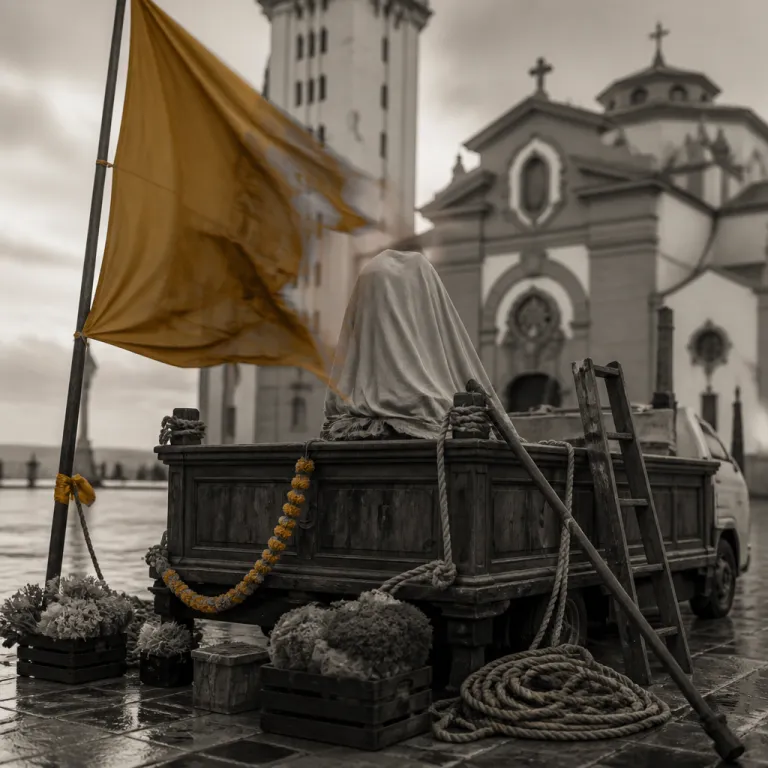
Why late summer patron saint festivals belong on a luxury itinerary
The Canary Islands’ patron saint festivals in late summer turn the archipelago into a living open-air chapel. For a luxury traveler, these celebrations are not background colour but the key to understanding how each island balances volcanic austerity with exuberant faith and music. Plan well and you can pair five-star suites with front-row access to processions, fireworks, and intimate neighbourhood gatherings that most visitors never see.
Across the Canary Islands, late July and August bring a dense calendar of fiestas that honour each patron saint with processions, traditional music, and coastal rituals. From the romería for Santiago in Gáldar on Gran Canaria to the great pilgrimage to the Basílica de la Virgen de Candelaria on Tenerife, the islands feel less like resort destinations and more like a chain of small, devout towns linked by shared history. These are not staged events for tourists; they are community rituals where you are a guest, not the audience.
For hotel planning, think in terms of festival hubs rather than generic Canary Island beach zones. On Gran Canaria, that means Gáldar and Agaete in the north, balanced with a base in Las Palmas de Gran Canaria or a quieter coastal enclave near Puerto Rico in the south. On Tenerife, you will want a few nights close to Candelaria or Santa Cruz de Tenerife, then perhaps shift to Puerto de la Cruz or the north coast for calmer post-festival days.
Luxury properties across the islands now understand that the summer patron saint season drives demand as much as school holidays. High-end concierges in Las Palmas, Santa Cruz, and La Palma routinely arrange private transfers to evening events, advise on where temporary road closures begin, and coordinate late checkouts after long nights of fireworks. If you book through a curated platform focused on premium stays in the Canary Islands, you gain access to teams who already know which streets usually close around procession times, which plazas fill first, and which rooms actually face the action.
The cultural argument is simple: attending a patron saint festival is the fastest way to move beyond the resort pool and into the emotional core of Canarian life. You will hear the same folk music in a romería that you later recognise when a hotel pianist slips a timple melody into a jazz set. You will see the same families who carried candles in Candelaria sharing tables at a guachinche in the hills above La Laguna, where the wine is poured from the barrel and the menu is whatever is ready.
For a solo explorer, this is also a remarkably safe and social way to engage with local life. Crowds at these festivals skew multi-generational, with grandparents, children, and groups of friends sharing the same streets, and that family focus keeps the atmosphere warm rather than rowdy. You can arrive alone at a plaza in Las Palmas or Santa Cruz and leave with restaurant recommendations, hiking tips, and perhaps an invitation to the next day’s celebrations.
Gran Canaria’s Santiago, Agaete’s Rama, and the night of San Juan
Gran Canaria is where the Canary Islands’ patron saint festival energy feels most concentrated, especially around the Fiesta de Santiago in Gáldar and the Bajada de la Rama in Agaete. In Gáldar, the romería for Santiago Apóstol, held around 24–25 July each year, turns the historic centre into a moving tapestry of ox carts, embroidered costumes, and live music that rolls late into the night. The festival is one of the island’s largest religious celebrations, and the combination of incense, roasted meats, and folk songs makes even the most seasoned traveler pause.
Base yourself in Las Palmas de Gran Canaria if you want urban comfort with easy access to these northern events. From the capital, it is less than 30 kilometres to Gáldar, and private drivers or hotel-arranged transfers mean you can enjoy the festival without worrying about late-night returns. Typical driving time is around 30–40 minutes outside peak closures, and choosing a property near Las Canteras beach lets you balance the intensity of the romería with morning swims and long breakfasts overlooking the Atlantic.
Agaete’s Bajada de la Rama, usually held on 4 August, is more kinetic than solemn, yet it remains deeply rooted in pre-Hispanic Guanche ritual. Locals and visitors carry pine branches from the Tamadaba forest down to the sea, dancing to brass bands in a joyous procession that symbolically calls for rain. The atmosphere is closer to a moving carnival than a static mass, but the spiritual undercurrent is clear when the crowd finally reaches the harbour and the branches touch the water.
For Bajada de la Rama, consider a two-centre stay on Gran Canaria. Spend a few nights in Las Palmas to enjoy the city’s restaurants and cultural events, then shift west to a refined coastal hotel near Agaete or south toward Puerto Rico for calmer seas and resort-style pools. Booking accommodation in Gáldar, Agaete, and along the north coast several months ahead is wise, as rooms near festival towns and harbour areas often sell out quickly once the summer festival calendar is published.
Do not overlook the earlier Noche de San Juan, when bonfires light up beaches across the Canary Islands and especially along Las Canteras in Las Palmas. In recent years, the main celebrations there have taken place on the night of 23 June, with fireworks and concerts organised by the city council. If you are planning a June or early summer trip, consult the latest municipal programme for San Juan night in the Canary Islands and where to stay for precise hotel and beach pairings. That night sets the tone for the whole season, blending fire, sea, and communal ritual in a way that echoes through later patron saint celebrations.
During these Gran Canaria events, dress codes are relaxed but respectful. Lightweight linen, closed shoes for cobbled streets, and a light jacket for breezy nights in Gáldar or Agaete will serve you well. If your hotel offers laundry or pressing, use it between festival days so you can travel light while still looking appropriate in church squares and at more formal masses.
Candelaria, Santa Cruz, and Tenerife’s August pilgrimages
Tenerife is the spiritual heart of the Canary Islands’ patron saint festivities, thanks to the Virgen de la Candelaria, patron saint of the entire archipelago. Her basilica anchors the coastal town of Candelaria on the east coast, where Dominican friars coordinate the major August celebrations that draw pilgrims from every island. The story reaches back to the Guanche people, who first encountered the image of the Virgin on these shores and wove her into their own cosmology.
On the nights leading into mid-August, tens of thousands walk toward Candelaria from all corners of Tenerife. Many leave from Santa Cruz de Tenerife or La Laguna, following coastal and mountain routes that turn the island into a web of moving candlelight. The official programme, typically centred on 14–15 August, includes a Guanche ceremony that reenacts the first encounter with the Virgin, followed by solemn masses and processions that fill the Plaza de la Patrona de Canarias.
The significance of the Guanche ceremony lies in the way it reenacts the discovery of the Virgin’s image by the island’s original inhabitants. That single idea captures why this festival feels different from other Catholic celebrations in Europe, because it fuses indigenous memory with later Christian devotion. When you stand in the square as the ceremony unfolds, you are watching the islands negotiate their layered identity in real time.
For accommodation, split your Tenerife stay between Santa Cruz or La Laguna and the south or north coast. A few nights in Santa Cruz place you close to both the pilgrimage routes and the port, with easy access to cultural events and refined dining, while a later move to Puerto de la Cruz or the south lets you decompress by the sea. Book Candelaria-area hotels several months ahead if you want to wake within walking distance of the basilica on the main festival days, as plaza-facing rooms and nearby parking are limited.
Luxury concierges on Tenerife can arrange private transfers to Candelaria, suggest streets that usually remain open to vehicles, and coordinate with local guides who know when to arrive to avoid the densest crowds. They will also advise on dress: modest clothing for masses, comfortable shoes for cobbled streets, and layers for cool night air along the coast. If you plan to walk even a short stretch of the pilgrimage, carry water, a light snack, and a small torch, as some sections are dimly lit.
From Tenerife, it is easy to extend your late-summer festival journey to quieter islands like La Gomera or La Graciosa. These smaller islands host their own celebrations for Nuestra Señora and other local saints, often with maritime processions and intimate village gatherings. For travelers willing to go beyond the main ferry routes, a specialist guide to La Gomera and La Graciosa helps you pair remote festivals with characterful, low-key luxury stays.
La Palma, Lanzarote, and coastal devotions to the sea
While Tenerife and Gran Canaria dominate the Canary Islands’ patron saint festival headlines, La Palma and Lanzarote offer a more contemplative, maritime take on devotion. On La Palma, celebrations for Nuestra Señora de las Nieves and other Marian figures bring processions down steep streets, often with views that plunge straight to the Atlantic. The island’s compact capital, Santa Cruz de La Palma, becomes a stage where balconies, cobbles, and church facades all participate in the choreography.
Lanzarote, by contrast, expresses its faith most vividly along the coast, especially during the festivities for Nuestra Señora del Carmen, protector of sailors. In Puerto del Carmen and other fishing towns, the image of the Virgin is carried to the harbour, placed on a boat, and taken out to sea in a flotilla of decorated vessels. Watching this from the water, ideally from a small charter arranged through your hotel, is one of the most moving experiences in the islands.
If you are planning a Lanzarote stay that balances these celebrations with refined comfort, consider an eco-minded apartment or villa near Puerto del Carmen. A curated option such as the apartments featured in this guide to refined apartment living in Puerto del Carmen places you within walking distance of harbour processions while preserving privacy and quiet. From there, you can attend evening masses, watch the maritime procession, then retreat to a terrace with a glass of Malvasía as fireworks echo off the lava fields.
La Palma’s summer festivals also reward those who value astronomy and silence as much as street life. You can spend the day hiking Caldera de Taburiente or visiting observatories, then descend to Santa Cruz de La Palma for evening processions that wind past wooden balconies and small plazas. High-end guesthouses and historic townhouses in the capital offer a level of intimacy that large resorts cannot match, with owners who often participate in the celebrations themselves.
Across these islands, the link between sea and saint is constant. Processions for Nuestra Señora del Carmen, Virgen del Carmen, and other maritime advocations often end with the image facing the ocean, a reminder that these communities still measure time by tides and fishing seasons as much as by the calendar year. For a traveler, that means planning around harbour closures, altered ferry schedules, and streets that become pedestrian-only for several hours.
Practical preparation is straightforward but essential. Book harbour-facing rooms early if you want direct views of maritime processions, and ask your hotel which balconies or rooftop terraces offer the best vantage points. Pack a light scarf or shawl for cooler sea breezes at night, and remember that respectful behaviour during masses and processions is non-negotiable, even when the atmosphere feels festive.
How to book smart around canary islands patron saint festivals summer
Planning a luxury trip around Canary Islands patron saint festivals in summer requires the same precision you might apply to a major sporting event or art biennale. Start by mapping the key dates: late July for Santiago in Gáldar, early August for Bajada de la Rama in Agaete, and mid-August for the Virgen de la Candelaria on Tenerife. Then layer in secondary celebrations for Nuestra Señora del Carmen, Nuestra Señora de las Nieves, and other local patrons across La Palma, Lanzarote, and smaller islands.
Once you have your calendar, choose two or three bases rather than trying to chase every festival across all the islands. A classic pattern is Gran Canaria plus Tenerife, with a possible extension to La Palma or Lanzarote for maritime celebrations, giving you a mix of urban energy, coastal rituals, and quieter days between events. Aim to book your hotels at least two to three months ahead for August stays, earlier if you want specific suites overlooking plazas or harbours.
Transport logistics matter more than usual during these festivals. Streets in Candelaria, Gáldar, Agaete, Santa Cruz de La Palma, and Puerto del Carmen often close to traffic during processions, and parking near basilicas or harbours can be nearly impossible. Work with concierges to arrange timed transfers that drop you on the edge of pedestrian zones, check typical closure windows in municipal programmes, and be prepared to walk the last few hundred metres through crowds.
For solo travelers, choosing the right property can shape how you experience the festivals. Urban hotels in Las Palmas or Santa Cruz de Tenerife offer anonymity and easy access to multiple events, while smaller coastal properties in Agaete, Puerto Rico, or Santa Cruz de La Palma provide a more intimate, village-like immersion. Either way, look for teams who can brief you on local customs, suggest the best vantage points, and advise on when to arrive to secure a good spot.
What to pack is simple but strategic. Comfortable walking shoes, breathable fabrics, and a small day bag for water, sunscreen, and a light layer will cover most situations, whether you are standing in the Plaza de la Patrona de Canarias or following a maritime procession along a harbour wall. A compact camera or phone with good low-light performance is useful, but remember that some moments, especially during masses, are better experienced without a lens between you and the scene.
Finally, treat these festivals as shared rituals rather than spectacles. Arrive early, greet people, and follow the lead of locals when it comes to applause, silence, or song. If you do, the Canary Islands patron saint festivals summer season will not just be a backdrop to your luxury stay; it will be the thread that ties together every island, every hotel, and every late-night conversation under the Atlantic stars.
FAQ
Are the patron saint festivals in the Canary Islands open to visitors?
Yes, the major patron saint festivals across the Canary Islands are open to visitors, and tourists are genuinely welcomed as long as they behave respectfully. Religious events such as masses, processions, and the Guanche ceremony in Candelaria are considered acts of devotion rather than performances, so modest dress and discreet behaviour are expected. There is no entrance fee for these events, and you can move freely through most public spaces unless access is restricted for safety reasons.
Do I need to pay to attend the Virgen de la Candelaria celebrations?
There is no ticketing system for the main Virgen de la Candelaria celebrations on Tenerife. The pilgrimage routes, Guanche ceremony, masses, and processions around the basilica are free to attend, though you may wish to make a voluntary donation inside the church. Arriving early is more important than purchasing anything, because the plaza and surrounding streets fill quickly on the main festival days.
What should I wear to patron saint festivals in summer?
Dress codes are relaxed but respectful across the Canary Islands patron saint festivals summer season. Lightweight, breathable clothing, closed shoes for cobbled streets, and a light jacket or shawl for cooler evenings will keep you comfortable from Gáldar to Candelaria and Santa Cruz de La Palma. Avoid beachwear in church spaces, and consider carrying a scarf to cover shoulders during masses or when entering basilicas.
How early should I book hotels for late summer festivals?
For August patron saint festivals, aim to book your hotels at least two to three months in advance, especially in Candelaria, Gáldar, Agaete, Santa Cruz de La Palma, and coastal towns hosting maritime processions. Harbour-facing rooms, plaza-view suites, and properties within walking distance of basilicas or main squares are the first to sell out. If you are set on a particular luxury hotel or room category, reserving even earlier gives you more choice and better alignment with specific festival dates.
Is it safe to attend these festivals as a solo traveler?
Patron saint festivals in the Canary Islands are generally very safe for solo travelers, with a strong family presence and a community-focused atmosphere. As with any crowded event, keep valuables secure, stay aware of your surroundings, and agree meeting points with hotel contacts or friends if you are joining others. Many solo visitors find these celebrations an easy way to connect with locals and fellow travelers, especially when staying in smaller, well-run properties where staff can offer personal guidance.