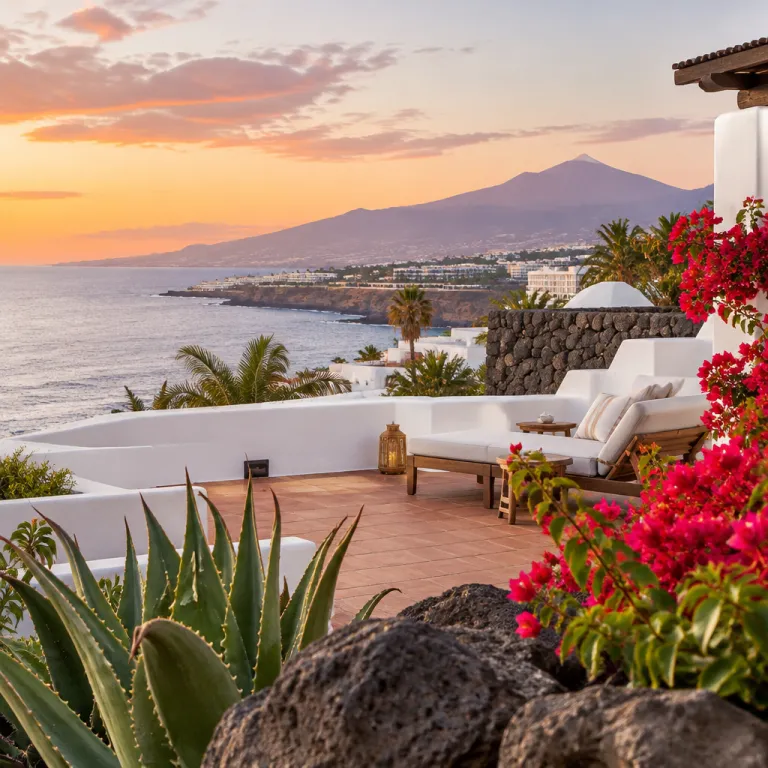
Understanding where Tenerife is and why its geography shapes luxury stays
Tenerife is a Spanish island in the Canary Islands, set in the Atlantic Ocean. This island lies off the northwest coast of Africa, giving Tenerife Canary a subtropical climate and long sunshine hours that appeal to luxury travelers. When you ask where Tenerife is, you are really asking where you can enjoy refined hotels framed by volcanic peaks and luminous seas.
The island of Tenerife belongs politically to Spain, yet geographically it sits closer to Morocco than to mainland Spanish cities. This strategic position in the Atlantic Ocean means the Canary Islands enjoy mild temperatures all year, which generally suits guests planning premium resort stays at any time. Understanding where Tenerife is located helps you choose the best area of the island, whether you prefer the lively south or the greener north.
With an area of about 2,034 km², Tenerife is the largest and most populous of all the Canary Islands. That scale allows for very different hotel zones, from the glamorous Costa Adeje in south Tenerife to the cultured streets of Santa Cruz in the north. When you plan to visit Tenerife, it is worth mapping the island carefully so each night’s stay matches your preferred style of luxury.
Mapping Tenerife: north, south, and the key coastal areas for premium hotels
To understand where Tenerife sits in practical travel terms, picture a triangle-shaped island with distinct north and south coasts. South Tenerife, including Costa Adeje and the area around Tenerife Sur airport, concentrates many of the best five-star resorts with direct access to golden beaches. The north around Puerto de la Cruz and Santa Cruz de Tenerife offers a different mood, with historic streets, black sand beaches, and refined city hotels.
Using a detailed Canary Islands map is invaluable when comparing luxury hotel locations across several islands. A dedicated resource such as the guide on how a Canary Islands map elevates your luxury hotel stay helps you visualise where each island sits in the Atlantic Ocean and how Tenerife connects to its neighbours. Once you see where Tenerife is relative to Gran Canaria, Lanzarote, and La Gomera, you can plan multi-island itineraries that pair different styles of premium accommodation.
In the north, Puerto de la Cruz has long attracted travelers who value characterful architecture and oceanfront promenades. The capital, Santa Cruz de Tenerife, anchors the eastern coast with cultural venues, shopping, and elegant Spanish hotels that suit urban luxury seekers. Between these northern hubs and the resorts of Tenerife south, you will find quieter coastal villages where smaller high-end properties overlook dramatic cliffs and wild beaches.
Santa Cruz, San Cristóbal de La Laguna, and cultured city stays on the island
When travelers ask where Tenerife is in relation to Spanish culture, the answer lies in its cities. Santa Cruz de Tenerife, usually called Santa Cruz, is the capital of the island and a gateway for cruise ships, business travelers, and guests seeking refined city hotels. Here, luxury properties cluster near the waterfront and cultural institutions, allowing you to pair premium suites with evenings at theatres and contemporary art spaces.
Just inland, San Cristóbal de La Laguna, often shortened locally to La Laguna or San Cristóbal de La Laguna, offers a very different urban experience. This university city, with its UNESCO-listed old town, features historic mansions converted into elegant accommodation, where courtyards, wooden balconies, and volcanic stone frame your stay. For travelers comparing where Tenerife is versus mainland Spain, La Laguna shows how deeply Spanish heritage runs through this Atlantic island while still feeling distinctly Canary.
Many guests choose to split their time between Santa Cruz hotels and stays in La Laguna to experience both maritime and highland atmospheres. This twin-city approach works especially well for culture-focused itineraries that still want easy access to beaches on the north coast and day trips to Mount Teide. A curated collection of elegant Spanish resorts in Spain, such as those highlighted in this overview of elegant Spanish resorts for a refined Canary Islands escape, can help you benchmark service levels before you book.
Costa Adeje, Tenerife South, and the premier beach resort zones
For many luxury travelers, the phrase where Tenerife is really means where Costa Adeje sits on the map. This stretch of coastline in south Tenerife has become the island’s flagship resort area, with a concentration of five-star hotels, fine dining, and designer shopping. Costa Adeje and the neighbouring Costa del Silencio and Playa de las Américas form a continuous resort corridor where premium suites overlook some of the best beaches on the island.
The climate in Tenerife south is generally warmer and drier than in the north, with higher sunshine hours that appeal to guests who prioritise poolside relaxation. Many resorts here were built years ago but have been extensively renovated, combining mature tropical gardens with contemporary interiors and high-end wellness facilities. When you compare islands within the Canary archipelago, this southern area of Tenerife stands out for its density of luxury options and easy access to Tenerife Sur airport, often referred to as Aeropuerto del Sur.
High-end hotels in Costa Adeje typically offer direct access to promenades, beach clubs, and water sports on the Atlantic Ocean. Suites often frame sunset views towards La Gomera island, reminding you that Tenerife Canary is part of a wider constellation of islands ideal for multi-stop itineraries. If you are considering extending your trip beyond Tenerife, resources such as this curated guide to Gran Canaria hotels for refined stays by the ocean can help you compare resort styles across the Canary Islands.
Teide National Park, Mount Teide, and high altitude retreats
Understanding where Tenerife is also involves looking upward, towards Mount Teide and the surrounding Teide National Park. This national park occupies the central area of the island, rising from pine forests to a volcanic plateau and the summit of Mount Teide at 3,718 metres. The contrast between sea-level beaches and this high-altitude landscape is one reason Tenerife’s status as the largest island feels so tangible during a single stay.
Luxury travelers increasingly pair coastal resorts with nights in or near Teide National Park to experience the island’s full range of environments. Some premium lodges and rural hotels sit above the clouds, where clear skies and low light pollution create exceptional stargazing conditions and long, quiet evenings. When you stand on the caldera rim and look down towards the Atlantic Ocean, the question of where Tenerife is becomes more than geography; it becomes a sense of being suspended between continents and climates.
Day trips from Costa Adeje, Puerto de la Cruz, or Santa Cruz to Teide National Park are straightforward, with well-maintained roads crossing the island. Many private drivers and concierge teams arrange tailored excursions that include cable car rides, guided hikes, and gourmet picnics among lava fields. This highland experience balances the indulgence of beachfront pools with the raw drama of volcanic scenery, reinforcing Tenerife Canary as a destination of layered luxury.
Climate, sunshine hours, and the best time to book luxury hotels
Because Tenerife sits in the Atlantic Ocean near the northwest coast of Africa, its climate is unusually stable for a European-linked island. The Canary Islands benefit from the Canary Current and trade winds, which moderate temperatures and provide generally mild conditions throughout the year. For guests choosing when to visit Tenerife, this means more flexibility and a longer booking window for securing the best suites.
South Tenerife, especially the area around Costa Adeje and Tenerife Sur, records higher sunshine hours than the greener north. This makes Tenerife south particularly attractive for winter sun escapes, when many other Spanish coastal regions feel cooler and less reliable. The north around Puerto de la Cruz and Santa Cruz tends to be slightly cooler and more humid, which some travelers prefer for hiking, cultural visits, and city-based stays.
When planning where Tenerife fits in your broader travel calendar, consider both climate and major events on the island. Luxury hotels in Santa Cruz and San Cristóbal de La Laguna often fill quickly around festivals, while coastal resorts see peak demand during European school holidays. Booking early allows you to secure ocean-view rooms, private villas, or high-floor suites that make the most of Tenerife’s light and landscape.
Practical orientation: where Tenerife sits within Spain and the wider Canary Islands
From a geopolitical perspective, Tenerife is fully part of Spain, even though it lies far from the Iberian Peninsula. When you ask where Tenerife is on a map of Spain, you will usually find it shown in an inset box to the southwest, alongside the other Canary Islands. Flights from major Spanish cities such as Madrid and Barcelona connect frequently to both Tenerife Sur and Tenerife Norte airports, making the island easy to integrate into wider Spanish itineraries.
Within the Canary Islands group, Tenerife occupies a central position, both geographically and in terms of population and tourism infrastructure. Its area and status as the largest island mean it offers the broadest range of luxury and premium hotel options, from urban properties in Santa Cruz to coastal resorts in Costa Adeje. Years ago, tourism focused mainly on a few southern beaches, but today high-end travelers can choose from sophisticated stays across both north and south coasts.
For orientation, remember that Puerto de la Cruz lies on the north coast, Santa Cruz on the eastern shore, and Costa Adeje on the southwest facing the open Atlantic Ocean. San Cristóbal de La Laguna sits inland at a higher altitude, while Mount Teide and Teide National Park dominate the central spine of the island. These clear reference points make it easier to answer where Tenerife is in relation to your preferred style of luxury travel, whether that means city lights, quiet coves, or volcanic horizons.
Key figures about Tenerife and its place in the Canary Islands
- Tenerife has an area of about 2,034 km², making it the largest island in the Canary Islands archipelago and allowing for diverse luxury hotel zones from north to south.
- The island’s population is close to one million residents (around 978,000 in 2023, according to Spain’s National Statistics Institute), which supports a sophisticated hospitality infrastructure with premium services, fine dining, and year-round cultural events.
- Tenerife is located in the Atlantic Ocean near the northwest coast of Africa, while politically it belongs to Spain, giving travelers European standards of service in a subtropical setting.
- The capital city is Santa Cruz de Tenerife, which functions as a major port and administrative centre and anchors many of the island’s high-end urban hotels.
FAQ about where Tenerife is and how to choose your hotel area
Which country does Tenerife belong to ?
Tenerife belongs to Spain and forms part of the autonomous community of the Canary Islands. Although the island lies off the northwest coast of Africa in the Atlantic Ocean, it follows Spanish laws, currency, and administrative structures. This combination offers European-style infrastructure with a subtropical island environment.
Where is Tenerife located geographically ?
Tenerife is located in the Atlantic Ocean, just off the northwest coast of Africa, roughly opposite southern Morocco and Western Sahara. Within the Canary Islands, it sits between Gran Canaria to the east and La Gomera and La Palma to the west. Its central position makes it a convenient base for exploring several islands during one trip.
What is the capital of Tenerife and where is it on the island ?
The capital of Tenerife is Santa Cruz de Tenerife, usually shortened to Santa Cruz. This city lies on the northeastern coast of the island and serves as a major port and cultural hub. Many travelers pair stays in Santa Cruz with time in nearby San Cristóbal de La Laguna for a richer urban experience.
Is Tenerife in Europe or Africa for travel planning purposes ?
Geographically, Tenerife lies close to Africa, but politically and culturally it is part of Europe through Spain. Flights, visas, and currency follow European norms, which simplifies logistics for many travelers. At the same time, the island’s position near the African coast shapes its climate and unique landscapes.
How does Tenerife’s size affect where I should book my hotel ?
Because Tenerife is the largest island in the Canary Islands, distances between north, south, and central areas are significant enough to influence your hotel choice. Guests focused on beaches and resort facilities often prefer south Tenerife, while those interested in culture and greener landscapes may choose the north or central highlands. Splitting your stay between two areas is often the most rewarding way to experience the island.