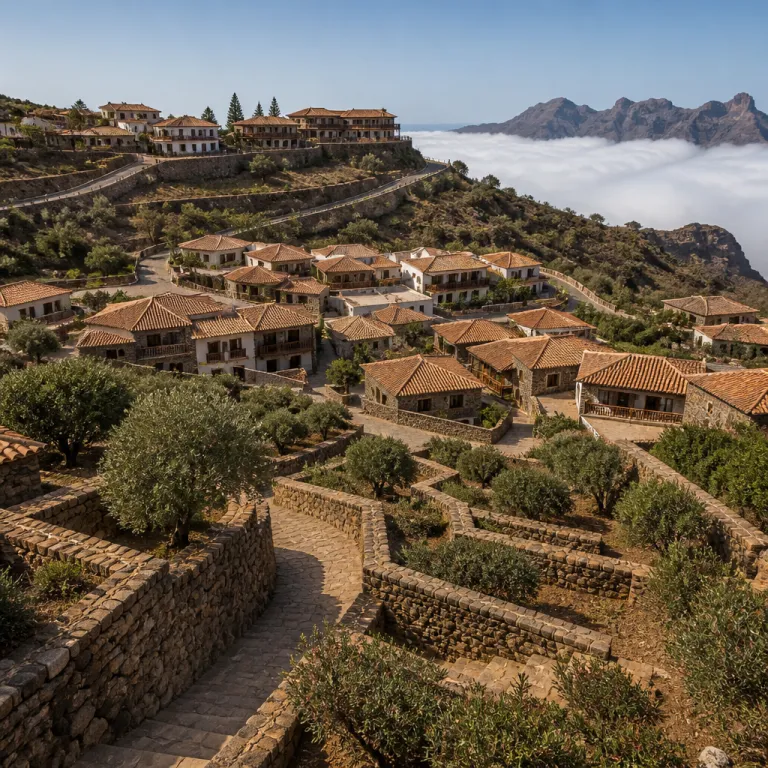
Gran Canaria’s interior: why Tejeda belongs on your hotel shortlist
Most travelers land in Gran Canaria and head straight for the coast. Those who pause and look inland towards the mountain amphitheater around Tejeda enter a different island, where volcanic walls rise from around 1 050 meters above sea level and almond trees frame the skyline. This is where the phrase “gran canaria mountain villages tejeda hotels” finally makes sense, because the right hotel places you inside the caldera rather than watching it from a distant resort balcony.
Tejeda is officially a mountain village, but it feels like a natural viewing platform. From the whitewashed streets of the village Tejeda center, you look across to Roque Nublo and Roque Bentayga, two basalt sentinels that define the heart of the island. Many travelers arrive with the thought of a quick visit, then extend their stay once they see the mountain views from their hotel terrace and realize how different this central landscape feels from the beaches near Las Palmas or Puerto Mogán.
The elevation shapes everything, from the light to the food. Days are clear and dry, nights are cool enough for proper sleep, and the sky often feels close enough to touch, which is why stargazing has become one of the tejeda popular evening rituals. Luxury hotels and smaller rural properties in this part of Gran Canaria now compete less on spa menus and more on how their rooms frame the view of Roque Nublo, Roque Bentayga, and the wider Caldera de Tejeda, giving guests a direct connection to the tejeda heart of the island.
Staying above the clouds in Tejeda and Cruz de Tejeda
Choosing between the different gran canaria mountain villages tejeda hotels starts with one question ; do you want to sleep in the village itself or on the rim of the caldera. In the compact streets of Tejeda, traditional houses have been converted into intimate hotels where stone walls, wooden balconies, and small courtyards keep you anchored to the village rhythm. Up on the ridge at Cruz de Tejeda, properties such as the historic Parador de Cruz de Tejeda, often shortened locally to Parador Cruz, trade proximity to cafés for sweeping mountain views in every direction.
Parador Cruz sits near the road junction that links Tejeda with San Mateo and the route down towards Las Palmas, which makes it a central base for exploring the island by car. Rooms face either the deep bowl of the Caldera de Tejeda or the gentler slopes that fall towards the north coast, and the best hotels here use floor to ceiling glass to turn every sunrise into a private show. When you check availability, pay attention to room orientation ; a west facing view will reward you with long golden evenings, while an east facing terrace catches the first light over the mountains and the distant Atlantic.
Parking is straightforward in Cruz de Tejeda, which matters if you are combining a stay here with time on the coast or at a digital nomad friendly property elsewhere in the Canary Islands, such as the long stay hotels highlighted in this guide to digital nomad hotels in the Canary Islands. Down in the village Tejeda streets, parking can be tighter, but many hotels reserve spaces or offer nearby alternatives, so it is worth checking this detail before you book. Either way, the combination of altitude, silence, and exceptional night skies makes this central part of Gran Canaria one of the best hotels zones in the archipelago for travelers who value landscape over nightlife.
Artenara and the cave hotels carved into volcanic rock
While Tejeda wraps around the caldera, Artenara clings to the cliffs above it as the highest village in Gran Canaria at around 1 270 meters. Here, the gran canaria mountain villages tejeda hotels narrative shifts from whitewashed houses to cave dwellings carved directly into the volcanic rock, many of which now operate as discreet hotels and guesthouses. Staying in one of these cave properties is less about conventional luxury and more about a sense of geological intimacy, as thick stone walls hold a stable temperature while windows frame the mountain views towards Roque Nublo and the distant ridge of Las Nieves.
Some of the best hotels in Artenara combine these traditional cave rooms with modern comforts such as private plunge pools, underfloor heating, and well considered lighting that respects the night sky. You wake to a view that drops from the village down towards the Caldera de Tejeda, then rises again to the silhouettes of Roque Bentayga and Roque Nublo, with the sea level far below often hidden by a blanket of cloud. For solo travelers, this kind of hotel offers a rare mix of privacy and proximity to hiking trails, with the village center only a short walk away for supplies and simple mountain restaurants.
Artenara also appeals to travelers who prefer adults only hotels and a quieter atmosphere than the coast, and you will find that some properties here echo the refined calm of the new generation of adults only hotels in the Canary Islands. Parking is usually available on the edge of the village, with short walks to most cave hotels, and the lack of through traffic keeps the soundscape dominated by wind and birds rather than engines. When you check availability for these cave stays, look carefully at the exact location, because a few extra minutes of walking can mean a far more dramatic view and a stronger sense of being suspended above the island.
Routes, hikes, and the volcanic amphitheater around Tejeda
Staying in the gran canaria mountain villages tejeda hotels only makes sense if you step outside and walk the landscape. The Caldera de Tejeda is a vast volcanic depression ringed by peaks and cliffs, with trails that link Tejeda, Artenara, Cruz de Tejeda, and smaller hamlets such as La Culata and La Degollada. Local tourist information centers often repeat the same practical advice ; “What is the best time to visit Tejeda and Artenara? Spring and autumn offer pleasant weather.”
From Cruz de Tejeda, a well marked path leads towards Roque Nublo, the island’s emblematic monolith, which rises like a stone sail above the surrounding pines. The hike is moderate rather than extreme, but the combination of altitude and exposure means you should bring layers, water, and proper footwear, especially if you plan a sunrise or sunset visit for the most dramatic mountain views. Another rewarding route drops from the village Tejeda area towards Roque Bentayga, where an archaeological site and small interpretation center explain the pre Hispanic significance of this rock to the island’s original inhabitants.
Drivers will appreciate how the roads from San Mateo and Vega de San Mateo climb steadily from near sea level up into the central massif, with viewpoints that look back towards Las Palmas and the north coast. Many hotels in this central region offer packed breakfasts or early coffee for hikers, and some can arrange transfers so you can walk point to point without worrying about parking at remote trailheads. If you prefer to mix mountain days with coastal time, it is entirely feasible to spend a few nights in Tejeda or Artenara, then drop down to a refined beachfront escape in San Agustín such as the property reviewed here ; a refined beachfront escape in San Agustín pairs well with a highland stay.
Food, culture, and practical details for a highland stay
Life in the gran canaria mountain villages tejeda hotels revolves as much around food as around views. Tejeda is famous across the Canary Islands for its almond based pastries, from dense mazapán to the local bienmesabe, and many hotel breakfasts feature these alongside local cheeses and honey. In the evenings, small restaurants in the village and around Cruz de Tejeda serve slow cooked goat, papas arrugadas with mojo, and seasonal stews that feel perfectly matched to the cooler mountain air.
Compared with the coast, nightlife is quiet, but that is part of the appeal for travelers who choose this central island region over the busier strips near Las Palmas or Puerto Mogán. Some hotels organize stargazing sessions on clear nights, taking advantage of the low light pollution and the way the caldera walls shield the tejeda heart from coastal glare. Others focus on wellness, with small spas, thermal circuits, and terraces designed for yoga at sunrise, often oriented towards Roque Nublo or the distant ridge of Las Nieves.
Practicalities are straightforward if you plan ahead and check availability early, especially during almond blossom season when tejeda popular festivals draw visitors from across Gran Canaria. Most hotels offer on site parking or reserved spaces nearby, and staff are used to advising guests on bus connections from Las Palmas or San Mateo for those who prefer not to drive. As local tourism offices often explain to new visitors ; “Are there hiking trails near these villages? Yes, numerous trails with varying difficulty.” and “Do the hotels offer local cuisine? Yes, many serve traditional Canarian dishes.”
How Tejeda and Artenara fit into a wider Gran Canaria itinerary
For many travelers, the question is not whether to stay in the gran canaria mountain villages tejeda hotels, but how to fit them into a broader Canary Islands itinerary. One effective approach is to start with a few nights in Las Palmas or another coastal center, then drive inland via San Mateo and Vega de San Mateo to Cruz de Tejeda, using a hotel there as a central base. From this ridge, you can visit Tejeda, Artenara, and viewpoints towards Las Nieves and Roque Nublo, before looping back down to the south coast.
Another strategy is to treat Tejeda or Artenara as the climax of a week that also includes time in Puerto Mogán or San Agustín, balancing sea level relaxation with highland clarity. The contrast between a beachfront hotel and a mountain hotel carved into rock or perched above the caldera is striking, and it underlines how varied a single island can be. If you enjoy golf, you can even combine a stay near one of the coastal golf courses with a few nights in the interior, trading fairways for hiking paths and resort pools for natural rock viewpoints.
Whichever direction you travel, the key is to respect distances and driving times, because Gran Canaria’s interior roads are winding and slow despite the island’s compact size. Plan no more than one or two major visits per day, allow time for unplanned stops at miradores, and remember that the best hotels in this region are designed for lingering rather than rushing. When you leave, the lasting memory is rarely a single roque or village, but the cumulative sense of an island where the tejeda heart beats high above the coast, in a landscape that rewards those who look beyond the obvious.
FAQ
When is the best season to stay in Tejeda or Artenara ?
Spring and autumn bring the most comfortable temperatures for hiking and exploring, with clear light and fewer heat extremes than midsummer. Winter can be cool at elevations above 1 000 meters, but sunny days are common and the air feels crisp rather than harsh. Summer stays are possible if you appreciate warm days and cooler nights than on the coast, though midday hiking requires more care.
Do I need a car to reach the mountain villages and hotels ?
You can reach Tejeda and Artenara by bus from Las Palmas or San Mateo, but services are infrequent and slower than driving. Renting a car gives you more flexibility for sunrise or sunset visits to viewpoints such as Roque Nublo and Roque Bentayga, and it simplifies access to remote hotels with limited public transport. If you prefer not to drive, consider a guided tour for day trips and choose accommodation in or near the village centers.
Are there good hiking options directly from the hotels ?
Many hotels in and around Tejeda, Cruz de Tejeda, and Artenara sit directly on established trail networks, so you can start walking from the door. Routes range from short loops around the caldera rim to longer traverses that link several villages and viewpoints. Local tourist information centers and hotel staff usually provide updated maps and can suggest trails that match your fitness level.
What should I pack for a stay in Gran Canaria’s mountains ?
Bring layers, because temperatures shift quickly between sunny afternoons and cooler evenings at altitude. Comfortable walking shoes are essential, even if you only plan short walks to viewpoints, and a light jacket or fleece is useful year round. Sunscreen, a hat, and a reusable water bottle complete the basics for both hiking and relaxed village wandering.
How far are the mountain villages from the coast and airports ?
Driving from Gran Canaria Airport to Tejeda typically takes around one hour, depending on traffic and stops, while Artenara is slightly farther along winding mountain roads. The journey from major coastal resorts such as Maspalomas or Puerto Mogán usually takes between 60 and 90 minutes. These distances make the mountain villages ideal for two or three night stays within a longer island itinerary.