Reading the canary islands wine denominations guide like a sommelier
The Canary Islands hold ten denominations of origin spread across seven islands. This canary islands wine denominations guide helps you read those labels with the same confidence you bring to a serious Spanish wine list. Think of it as a wine map that turns a casual glass into a deliberate tasting.
Each island and each island denomination expresses a different balance of Atlantic wind, altitude and volcanic soil. From sea level vineyards on Lanzarote to high vines above 1 000 metres in Tenerife, the range of wine regions is unusually compressed yet wildly diverse. That density of styles makes the canary islands wine denominations guide essential if you want your wines to match both your plate and your hotel view.
At the core of this landscape sit three key grape varieties. Listán Blanco and Listán Negro are the workhorses, while Malvasía Volcánica is the island star that anchors many sweet wines and structured whites. Around them orbit other grapes and red grape varieties that rarely appear on mainland Spanish white or red lists.
For luxury travellers, understanding this wine map changes how you book and how you dine. A hotel with its own vines or partnerships with nearby vineyards can curate tastings that move from mineral white to fragrant red in a single sunset. When you read “islands wine pairing menu” on a room service card, you will know whether to ask for Listán Negro or a glass of Blanco Malvasia instead.
Many high end properties now treat the canary islands wine denominations guide as a backbone for their cellar. On Tenerife, serious dining rooms often separate Tenerife wine by denomination, from Tacoronte Acentejo to Abona. In Gran Canaria, the best hotel bars increasingly highlight Gran Canaria denominated wines alongside classic Italian wine and benchmark Spanish wine references.
Tenerife’s five denominations: from Tacoronte to Abona
Tenerife is the only island with five denominations of origin, making it the most intricate chapter in any canary islands wine denominations guide. The north hosts Tacoronte Acentejo, Valle de la Orotava and Ycoden Daute Isora, while Abona and Valle de Güímar stretch across the sunnier south and east. For travellers, this means you can cross several wine regions in a single island hopping drive.
In the green north, Listán Negro thrives on steep volcanic soil terraces. Here, red wines often show smoky notes, black fruit and a savoury mineral edge that pairs beautifully with slow cooked goat or grilled octopus. White wines from Listán Blanco and Malvasía Volcánica tend to be saline, with a tension that reflects both altitude and proximity to the ocean.
The Ycoden Daute Isora area, sometimes written as Ycoden Daute, is particularly interesting for hotel based tastings. Many vineyards sit between 300 and 800 metres above sea level, where vines benefit from cooler nights and filtered Atlantic light. Expect both structured red grape blends and expressive white varieties that feel tailor made for long terrace lunches.
Abona, in the south, climbs from coastal hotels almost up to the Teide slopes. Here, vineyards can reach some of the highest altitudes in European islands wine culture, with vines planted above 1 200 metres. The resulting wines, especially from Listán Blanco and Blanco Malvasia, often show piercing acidity and a clean mineral profile that cuts through richer resort cuisine.
If you are planning a multi island itinerary, pair this Tenerife focus with a broader route. A smart way to do it is to follow an island hopping itinerary from Tenerife to La Palma and schedule tastings in at least two Tenerife denominations. That way, your personal canary islands wine denominations guide becomes anchored in real glasses, not just maps.
Lanzarote, Gran Canaria and the art of volcanic hospitality
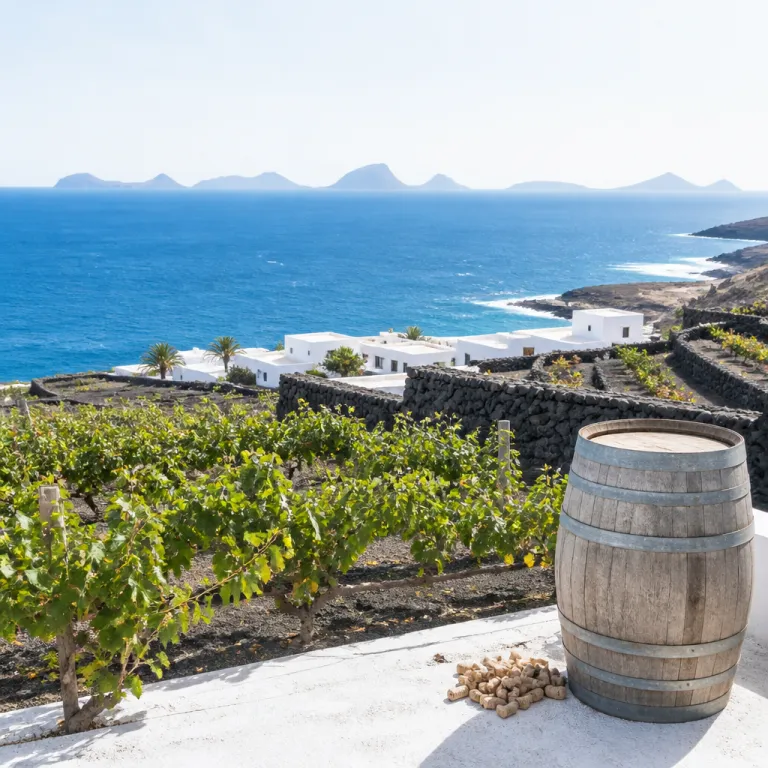
Lanzarote offers one of the most dramatic wine landscapes on earth, and any canary islands wine denominations guide must start here for pure theatre. Vines are planted in hollows scooped from black volcanic ash, each protected by low stone walls that shield grapes from the wind. The effect is lunar yet surprisingly lush, especially where Malvasía Volcánica dominates.
Malvasía Volcánica on this island is usually vinified as both dry and sweet wines. Dry versions show citrus, white flowers and a distinctive mineral line that reflects the porous volcanic soil. Sweeter expressions, sometimes blended with other grapes, can be served chilled as an aperitif on a hotel terrace or alongside local desserts.
Luxury properties on Lanzarote increasingly integrate vineyards into their design. Some partner with nearby estates to offer guided walks through the ash fields, where you can see how each vine sits several metres below sea level in its own crater. These experiences bring the canary islands wine denominations guide to life, turning abstract terms like “volcanic ash” into something you can touch and smell.
Gran Canaria has its own denomination, centred on mid altitude valleys that produce both red and white wines. Here, Listán Negro often shares space with other red grape varieties, while Listán Blanco and Malvasía Volcánica contribute to fresh, Atlantic influenced whites. The best hotel bars in Las Palmas now list Gran Canaria wines alongside classic Italian wine and broader Spanish wine selections, giving you a clear sense of place in the glass.
For a refined base that takes wine seriously, consider a stay at a property such as a beachfront luxury hotel in San Agustín. From there, you can explore nearby vineyards by day and return to a curated islands wine list at night. Pair those glasses with local seafood and papas arrugadas to understand how the canary islands wine denominations guide connects directly to the plate.
Culture lovers can also align tastings with island events and gastronomy festivals. Planning around late summer cultural events in the Canary Islands lets you combine concerts, exhibitions and serious wine sessions. The message from local chefs is clear ; local wine and local food complete the terroir experience.
Smaller islands, serious wines: La Palma, La Gomera and El Hierro
Beyond Tenerife, Lanzarote and Gran Canaria, three smaller islands carry their own denominations and distinct personalities. La Palma, La Gomera and El Hierro each deserve a chapter in any canary islands wine denominations guide aimed at curious drinkers. They are also ideal for travellers who prefer quiet luxury, dark skies and slow evenings.
La Palma’s vineyards climb from near sea level up to high volcanic ridges. Here, Malvasía Volcánica and other white varieties produce both dry and sweet wines with intense aromatics and a marked mineral backbone. Red wines, often based on Listán Negro and other local grapes, can be surprisingly structured for such a small island.
La Gomera is known for its ancient terraces and heroic viticulture. Vines cling to steep slopes, and many plots are still worked by hand, which gives the wines a certain rarity value. Expect fresh, Atlantic driven whites and light reds that pair beautifully with island fish and simple grilled meats.
El Hierro, the smallest inhabited island, offers a different kind of remoteness. Its denomination covers vineyards scattered across dramatic volcanic landscapes, where vines grow in soils rich in basalt and other volcanic minerals. Wines here often show a pronounced mineral character, with both white and red expressions that feel almost saline.
For high end travellers, these islands reward those who value authenticity over spectacle. Many luxury oriented guesthouses and hotels here are intimate, with owners who know their local wine map by heart. When they recommend a glass of Listán Blanco or a particular Blanco Malvasia, they are effectively giving you a personalised canary islands wine denominations guide in real time.
From label to glass: decoding grapes, styles and hotel wine lists
Once you understand the denominations, the next step in any canary islands wine denominations guide is decoding grapes and styles. Listán Blanco usually signals a fresh, often saline white wine that can range from simple and crisp to complex and age worthy. Listán Negro, by contrast, tends to produce medium bodied red wines with spice, smoke and gentle tannins.
Malvasía Volcánica is the headline grape for many visitors. In dry form, it offers aromatic intensity, stone fruit and a firm mineral line that reflects volcanic soil and ash. In sweet wines, especially those labelled as Malvasía or Blanco Malvasia, you can expect honeyed notes balanced by acidity that keeps the palate clean.
Hotel wine lists across the Canary Islands now increasingly highlight these varieties by name. A serious property in Tenerife might group its Tenerife wine offerings by denomination, then list grapes such as Listán Blanco, Listán Negro and Malvasía Volcánica underneath. In Gran Canaria, you may see a dedicated section for Gran Canaria denominated wines alongside broader Spanish white and red selections.
When you read a label or a list, pay attention to altitude and site. References to vines grown near sea level often signal riper fruit and softer acidity, while higher vineyards usually deliver more tension and freshness. Mentions of volcanic ash or specific volcanic soil types are not marketing fluff ; they genuinely influence texture and the mineral impression in both white and red wines.
For travellers used to Italian wine or classic mainland Spanish wine, these labels can feel unfamiliar at first. Use that as an opportunity to ask the hotel sommelier for a mini canary islands wine denominations guide tailored to your meal. A good rule of thumb is simple ; Listán Blanco for seafood, Listán Negro for grilled meats, Malvasía Volcánica when you want something that tastes unmistakably of the islands.
Planning a wine led stay: pairing denominations with destinations
Turning the canary islands wine denominations guide into an itinerary starts with choosing your base. If you want maximum variety, Tenerife offers five denominations within easy driving distance of high end coastal hotels. For a more focused experience, Lanzarote or Gran Canaria let you dive deep into a single denomination while enjoying polished resort infrastructure.
On Tenerife, consider splitting your stay between the north and south. A few nights near Tacoronte Acentejo or Valle de la Orotava put you close to historic vineyards and guachinches where wine is poured from the barrel. Moving south towards Abona brings you closer to high altitude vines and sleek properties with panoramic pools and serious cellars.
Lanzarote works well for travellers who appreciate design, architecture and stark volcanic landscapes. Choose a hotel that can arrange private visits to Malvasía Volcánica producers, ideally including a walk through the ash pits at dawn or dusk. Back at the property, ask for a tasting flight that moves from dry white to sweet wines, so you can feel how the grape shifts with style.
Gran Canaria is ideal if you want to balance city energy with vineyard calm. Base yourself in a refined coastal hotel or an urban property in Las Palmas, then schedule day trips into the island’s wine regions. In the evening, compare local islands wine with benchmark Italian wine and mainland Spanish white references to understand where the archipelago sits in the broader wine map.
For a quieter, more contemplative stay, build a route that includes La Palma, La Gomera or El Hierro. Here, the canary islands wine denominations guide becomes less about ticking boxes and more about meeting growers, tasting rare grapes and watching stars after dinner. Whatever your route, treat each glass as a map of the island beneath your feet, from volcanic soil to sea level breezes.
FAQ
How many wine denominations do the Canary Islands have ?
The Canary Islands have ten official denominations of origin spread across seven islands. Tenerife alone holds five denominations, while Lanzarote, Gran Canaria, La Palma, La Gomera and El Hierro each have one. This density of wine regions in a relatively small archipelago makes a canary islands wine denominations guide especially useful for travellers.
What are the main grape varieties in Canary Islands wines ?
The key grapes are Listán Blanco, Listán Negro and Malvasía Volcánica. Listán Blanco usually produces fresh, often saline white wines, while Listán Negro is used mainly for medium bodied reds with spice and smoke. Malvasía Volcánica appears in both dry and sweet wines, often showing strong aromatics and a clear mineral line.
Which island is best for a first wine focused trip ?
Tenerife is the most practical starting point for a first wine focused visit. It offers five denominations, a wide range of vineyards from sea level to high altitude and a strong selection of luxury hotels with serious wine lists. Lanzarote and Gran Canaria are excellent second choices if you prefer to explore a single denomination in depth.
Can I visit vineyards easily from luxury hotels ?
Many luxury and premium hotels across the islands work closely with nearby vineyards. On Tenerife, Lanzarote and Gran Canaria, concierge teams can arrange private tastings, guided walks through volcanic vineyards and transfers so you do not need to drive. Smaller islands such as La Palma or El Hierro may require more planning, but the experiences are often more intimate.
How do Canary Islands wines compare to mainland Spanish and Italian wines ?
Canary Islands wines share some traits with other Atlantic influenced Spanish regions but remain distinct because of their volcanic soil, altitude range and indigenous grapes. Compared with many Italian wine styles, they often show more saline notes and a different mineral profile. For travellers used to classic Spanish wine or Italian wine, tasting across several denominations offers a fresh perspective on European island terroir.
Suggested references for further reading ; Instituto Canario de Calidad Agroalimentaria (ICCA), official Consejo Regulador websites for each Denominación de Origen, and the Spanish Ministry of Agriculture, Fisheries and Food.